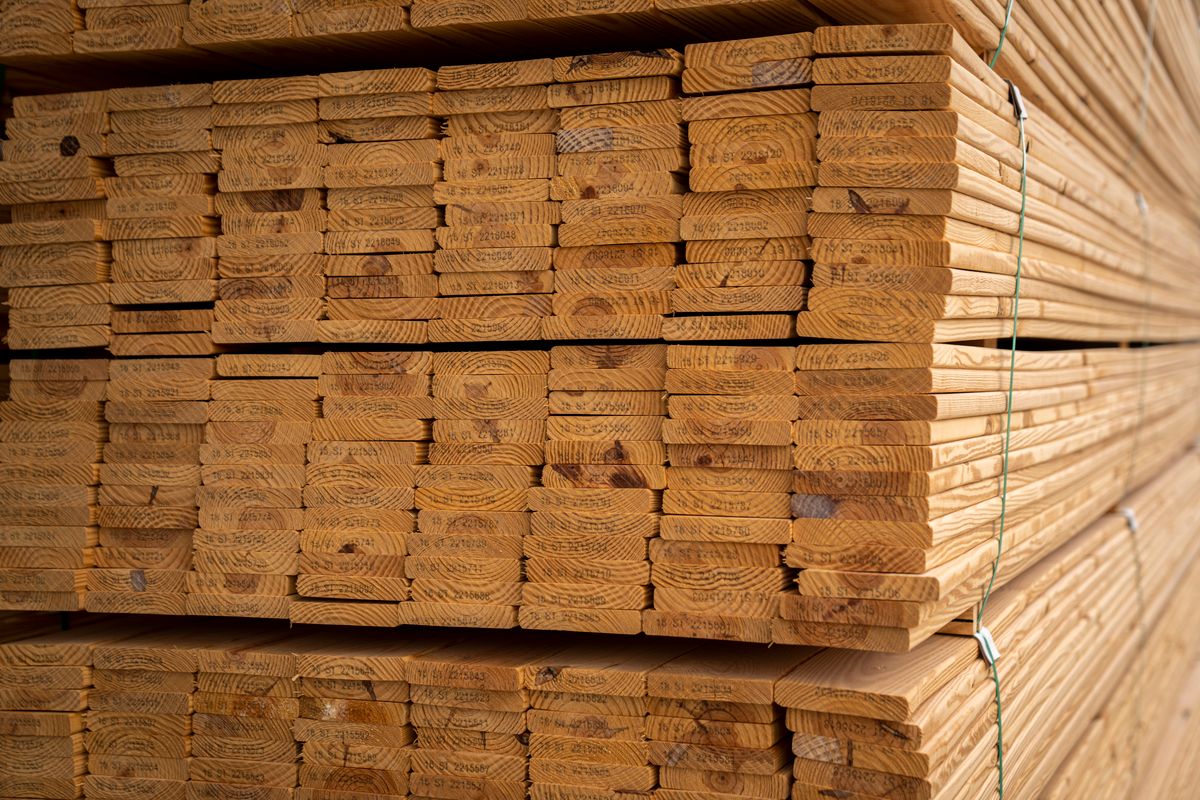
Choosing the right wood makes your first projects much easier. The best wood for beginners is affordable, easy to find at a home center, simple to cut and sand, and forgiving of small mistakes. Here are the six options most new woodworkers start with, what each one is good for, and a few to avoid for now.
1. Pine
Pine is the classic starter wood. It is inexpensive, light, and cuts easily with basic tools. The tradeoffs: it dents easily, often has knots, and can turn blotchy when stained.
Best for: shelves, storage boxes, simple furniture, practice projects.
2. Poplar
Poplar is a hardwood that is still soft enough to work easily. It is straighter and more stable than pine, and it takes paint beautifully. Its green and gray streaks are why most people paint it rather than stain it.
Best for: painted furniture, trim, drawer parts.
3. Red Oak
Red oak is widely available at big-box stores and is strong and hard-wearing. It is harder to cut and drill than pine, so pre-drill screw holes. Its open grain takes stain well.
Best for: tables, chairs, and pieces that need to last.
4. Maple
Maple is very hard and durable, which makes it great for cutting boards and work surfaces. It can be tough on dull tools and can stain unevenly, so many people leave it natural.
Best for: cutting boards, countertops, durable furniture.
5. Plywood
Good plywood, such as birch plywood, is flat, stable, and available in large sheets. It is perfect for cabinet sides, shelves, and workbench tops. Look for sheets labeled with a smooth face veneer on at least one side.
Best for: cabinets, bookshelves, workbench tops.
6. MDF
Medium-density fiberboard is smooth, cheap, and perfectly flat, which makes it easy to paint. It is heavy, it swells when wet, and cutting it makes fine dust, so wear a dust mask.
Best for: painted shelves and indoor projects that stay dry.
Woods to Avoid as a Beginner
- Pressure-treated lumber indoors. It is made for outdoor use and is often wet when sold.
- Exotic, oily hardwoods. They are expensive and can be hard to glue and finish.
- Badly warped or twisted boards. No technique fixes a board that will not sit flat.
Understand Lumber Sizes
Lumber is sold by nominal size, not actual size. A 1×4 board actually measures about 3/4 inch by 3-1/2 inches, and a 2×4 is about 1-1/2 by 3-1/2 inches. Always measure the real board before you plan your cuts.
How to Pick Good Boards at the Store
- Sight down the length of each board and skip any that bow or twist.
- Check the ends for cracks.
- Choose boards with small, tight knots instead of large or loose ones.
- Let wood rest indoors for a few days before you build, so it adjusts to your home’s humidity.
Once you have your wood, start with one of our easy woodworking projects for beginners. If you want step-by-step plans with cut lists, see our overview of woodworking plans for beginners.
Leave a Reply