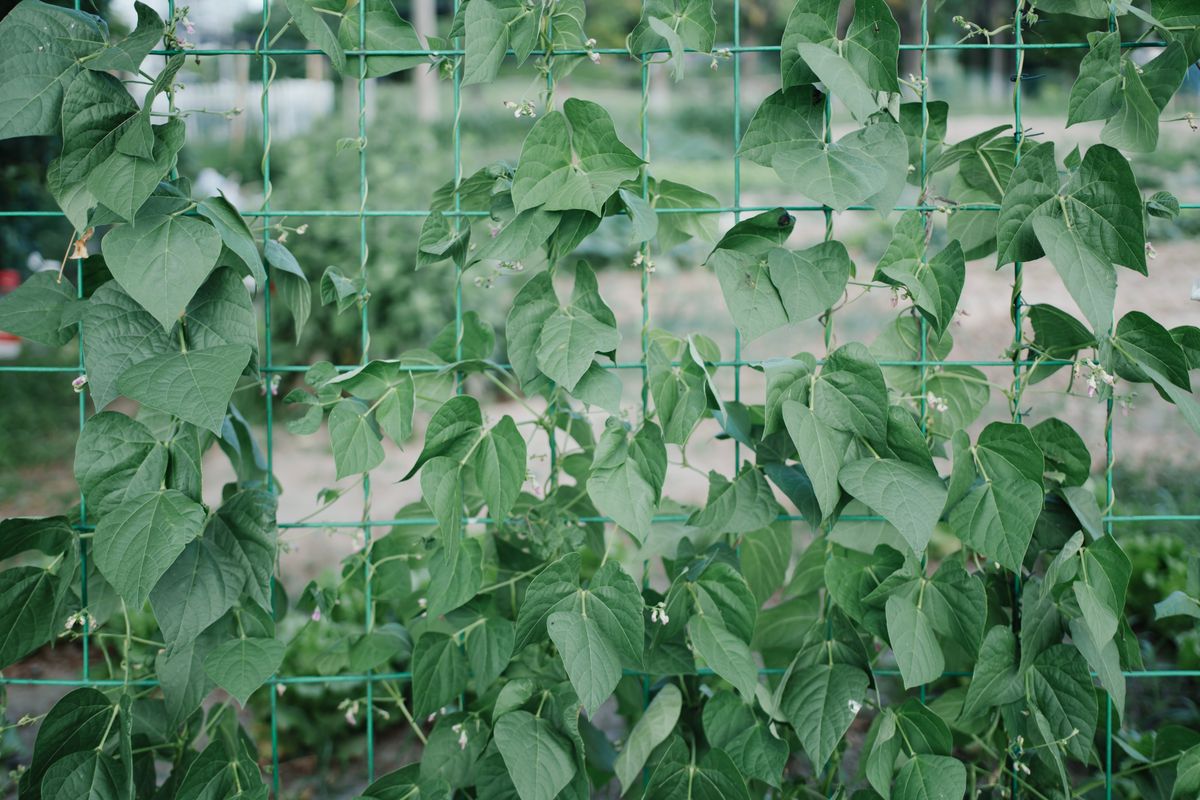
A trellis lets climbing plants grow up instead of out. You save space, get better airflow around leaves, and keep fruit off the ground. Here is how to build a garden trellis with three simple designs, from quick and cheap to sturdy and long-lasting.
Which Plants Need a Trellis?
- Cucumbers
- Pole beans
- Peas
- Indeterminate tomatoes
- Small melons and squash (with slings for the fruit)
- Climbing flowers such as morning glories and sweet peas
Where to Put It
Place your trellis on the north side of a bed so it does not shade shorter plants. Set it up before or at planting time so you do not disturb roots later.
Option 1: Simple Post and Twine Trellis
Best for: peas and pole beans.
- Drive two sturdy wood posts or metal T-posts into the ground about 4 to 6 feet apart. Set wood posts at least 12 to 18 inches deep.
- Screw or tie a crossbar between the tops of the posts.
- Tie garden twine from the crossbar down to a lower wire or stake every 6 inches.
- Compost the twine and old vines together at the end of the season.
Option 2: A-Frame Trellis
Best for: cucumbers and beans in raised beds.
- Build two rectangular frames from 2×2 lumber, about 4 feet wide and 5 feet tall.
- Staple or screw garden netting, wire mesh, or wooden lattice across each frame.
- Hinge the frames together at the top, or tie them, so they stand as an “A.”
- Plant on both sides. The space underneath works well for shade-tolerant lettuce in summer.
Option 3: Cattle Panel Arch
Best for: heavy crops and a long-lasting garden feature.
- Buy a galvanized cattle panel, often sold in 16 foot lengths at farm supply stores.
- Drive two T-posts on each side where the ends of the arch will stand.
- Bend the panel into an arch between two beds or over a path. This works best with two people.
- Secure the ends to the T-posts with heavy-duty zip ties or wire.
Cattle panel arches are very strong and can last for many seasons.
Tips for Training Plants
- Gently guide young vines onto the trellis and tie them loosely with soft twine.
- Check plants every few days during fast growth.
- Harvest often. Many climbing crops produce more when picked regularly.
Wondering what to grow on it? See our list of the best vegetables for raised beds, and learn how to build a raised garden bed to go with it.
Leave a Reply