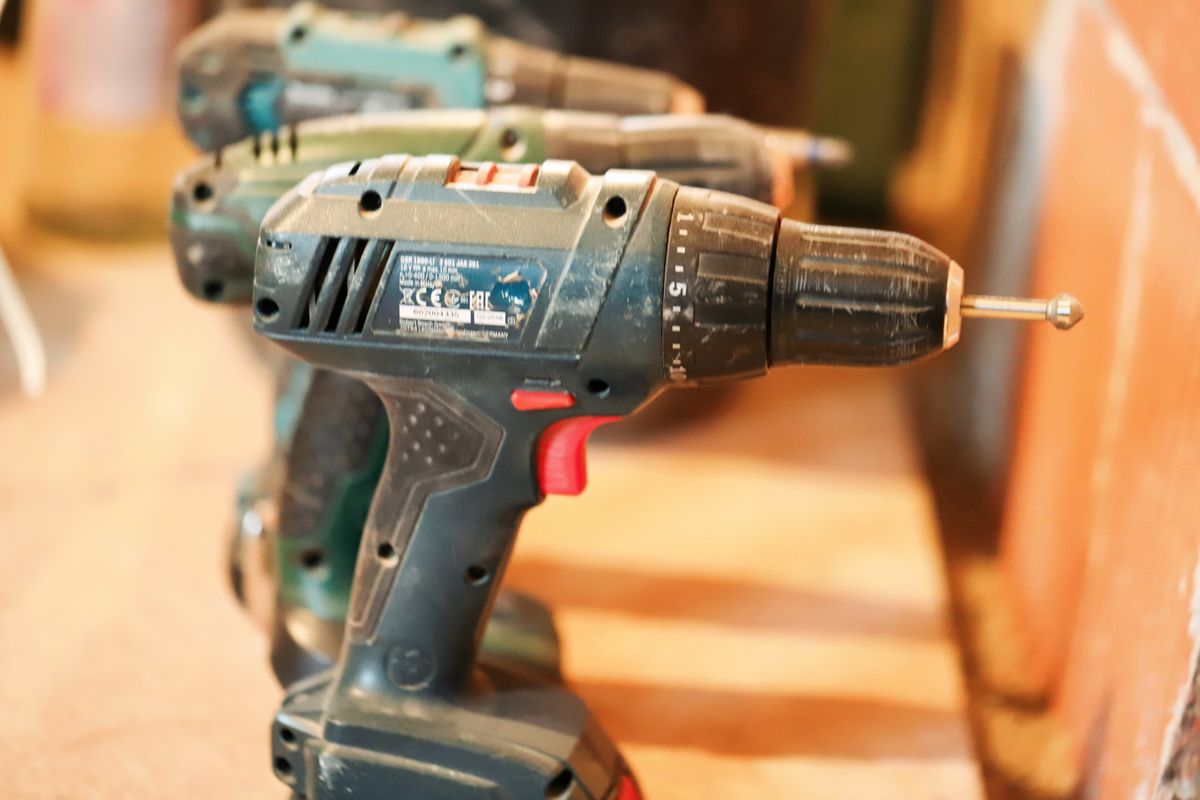
A cordless drill is the first power tool most people buy, and the options can be confusing. Voltage, brushless motors, impact drivers, battery sizes: what actually matters? Here is how to choose a cordless drill that fits the projects you plan to do.
Drill/Driver, Impact Driver, or Hammer Drill?
- Drill/driver: the all-rounder. It drills holes and drives screws, with a clutch that stops screws from going too deep. This is the one to buy first.
- Impact driver: delivers rapid bursts of force for driving long screws and lag bolts. It is not designed for precise drilling.
- Hammer drill: adds a hammering action for drilling into brick and concrete. Useful only if you work with masonry.
Many brands sell a combo kit with a drill/driver and an impact driver that share batteries, which is often good value.
12V vs. 18V/20V
- 12V drills are smaller and lighter. They are great for furniture assembly, hanging pictures, and light DIY.
- 18V and 20V drills have more power and longer run time for decks, framing, and larger holes. In the U.S., “20V max” usually refers to the same batteries other brands call 18V.
If you plan to build furniture and do home projects, an 18V/20V drill is the more flexible choice.
Brushless vs. Brushed Motors
Brushless motors run cooler, last longer, and get more work out of each battery charge. They cost more. A brushed drill is fine for occasional use, while a brushless drill is worth it if you will use it often.
Features That Matter
- Chuck size: a 1/2 inch chuck holds larger bits than a 3/8 inch chuck.
- Clutch settings: let you control torque so you do not strip screws or crack wood.
- Two speed ranges: low speed for driving screws, high speed for drilling.
- LED light: helps in cabinets and dark corners.
- Weight and balance: hold it in the store if you can. A drill that feels comfortable gets used more.
Batteries: Amp-Hours and Platforms
Battery capacity is measured in amp-hours (Ah). A 2.0 Ah battery is light; a 4.0 Ah or larger battery runs longer but adds weight. A kit with two batteries lets you keep working while one charges.
Most important of all, a battery usually works only with tools from the same brand and platform. Pick a brand with other tools you may want later, such as a circular saw or sander, so your batteries work across all of them.
Our Recommendation for Beginners
Choose an 18V/20V drill/driver from a brand whose platform includes the other tools you are likely to buy, with two batteries and a charger. Add an impact driver later if you start driving lots of long screws.
See how a drill fits into a starter kit in our list of basic tools for beginners.
Setting up your workspace?
If you are building or upgrading a small home workshop, our review of The Ultimate Small Shop covers a guide to choosing tools, layouts, dust control and safety for small spaces.
Read the Small Shop Guide review →
Leave a Reply