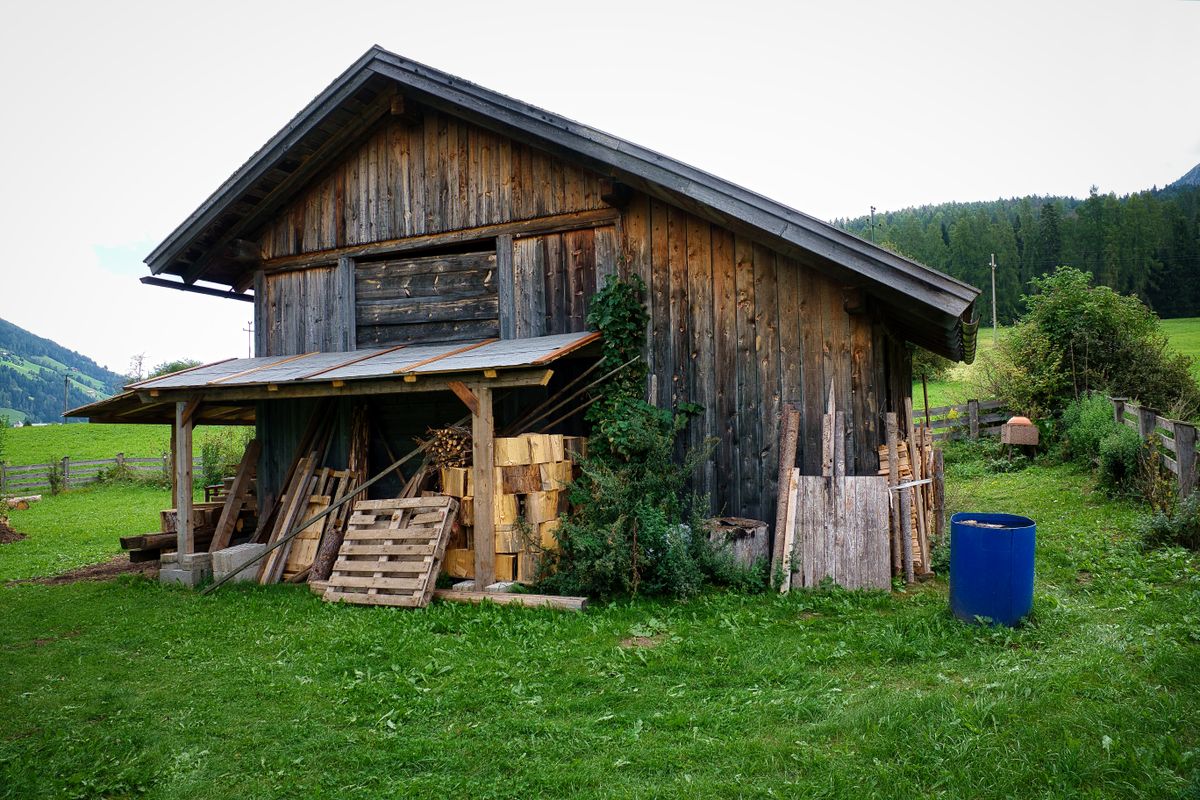
The most common regret among shed owners is simple: they built it too small. Garden tools, bikes, holiday decorations and the new lawn mower all compete for space faster than you expect. On the other hand, a shed that is too large can take over the yard and may need a permit. This guide will help you answer the question “what size shed do I need?” before you build or buy.
Start With a Simple Inventory
Before thinking about dimensions, list what will go inside. Group items by size:
- Large: lawn mower, wheelbarrow, bikes, snow blower, grill
- Medium: bins, bags of soil, coolers, ladders
- Small: hand tools, pots, hoses, paint cans
Large items drive the floor size. Medium and small items can often go on shelves and wall hooks, which is why wall space matters as much as floor space.
Common Shed Sizes and What Fits
4×6 or 4×8 (lean-to or mini shed)
Good for hand tools, a few garden supplies and a hose reel. It will not fit a ride-on mower. A great choice for small yards and patios.
8×8
A popular entry size. It fits a push mower, a wheelbarrow, rakes and shovels, with shelves on one wall.
8×10 or 8×12
The sweet spot for many homes. Room for a push mower, bikes, a workbench along one wall, and storage bins. If you are unsure, this range is a safe bet.
10×12 to 12×16
Fits a riding mower, more bikes, and a real potting bench or small workshop area. Check local permit rules carefully at this size.
Larger than 12×16
Now you are into workshop, studio or garage territory. Expect a permit, a stronger foundation and possibly electrical work.
Do Not Forget Height and Doors
Floor size is only part of the picture.
- Wall height: taller walls let you stack shelves higher and hang long tools.
- Roof style: a gambrel or barn-style roof adds overhead storage space, and some designs allow a small loft.
- Door width: measure your widest item. Riding mowers and wheelbarrows often need a double door.
- Ramp: heavy equipment rolls in much more easily with a ramp than a step.
Check the Rules Before You Choose
Many towns set a size limit, often somewhere between 100 and 200 square feet, above which a shed needs a building permit. There may also be rules about height and distance from property lines. A 10×12 shed is 120 square feet, so it sits right in the range where rules often change. Confirm your local limits early so your plan fits the rules.
A Simple Rule of Thumb
Add up what you need today, then add roughly 25 to 50 percent for the future. Storage needs almost always grow. If two sizes look close, choose the larger one as long as it fits your yard and local rules.
Plan the Inside Layout
Sketch the floor plan on paper before you decide:
- Put the largest items nearest the door.
- Run shelves along the back and side walls.
- Use wall hooks and pegboard for long-handled tools.
- Leave a clear path at least 2 to 3 feet wide down the middle.
Final Thoughts
For most households, an 8×10 to 10×12 shed covers garden tools, a mower and seasonal storage with room to grow. Measure your largest items, check local rules, and plan for more storage than you think you need. When you are ready to build, our shed building overview covers each step, and our RyanShedPlans review looks at a large library of designs in many sizes and roof styles.
Leave a Reply