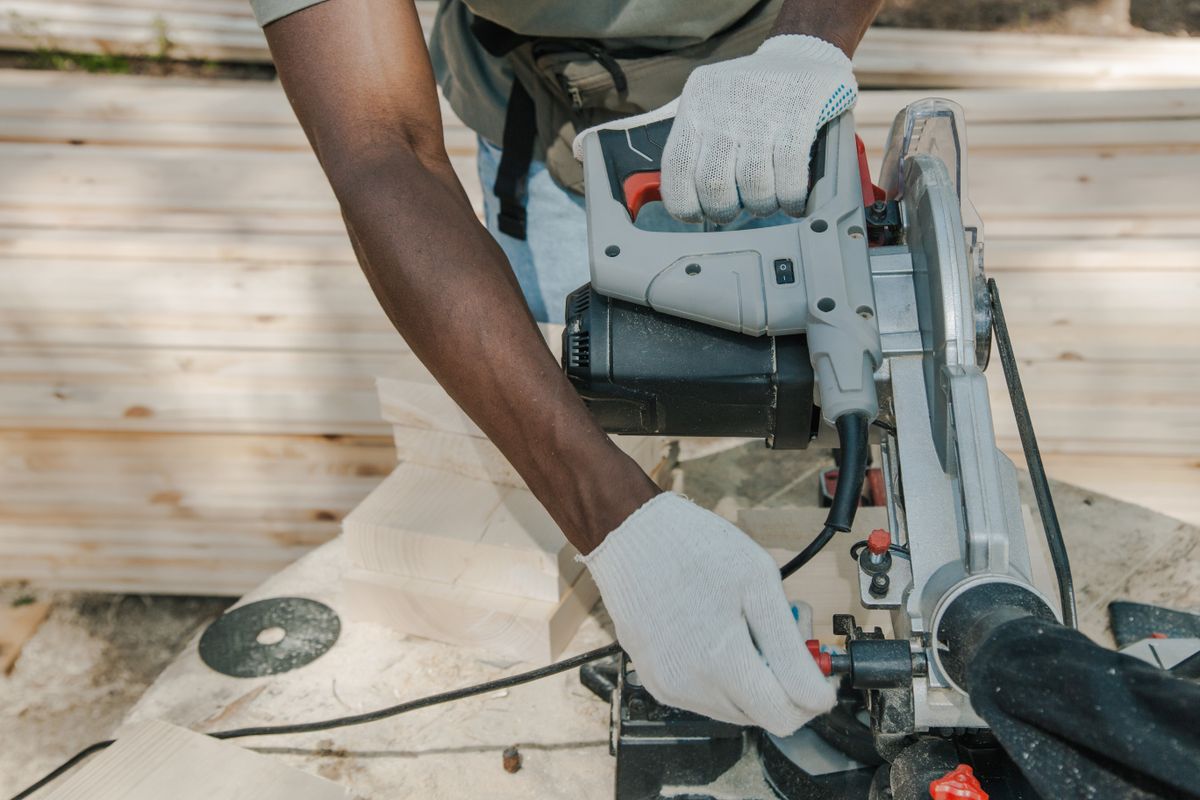
A circular saw is one of the most useful power tools you can own. It cuts boards to length, rips plywood sheets into strips, and handles most of the cuts a beginner project needs. It also demands respect. This guide shows you how to use a circular saw safely, step by step, so your first cuts are straight and controlled.
Know the Parts Before You Plug It In
- Blade guard: the spring-loaded cover that retracts as you cut. Never pin it open.
- Base plate (shoe): the flat plate that rides on the wood. It has a notch that shows where the blade will cut.
- Depth adjustment: a lever that raises or lowers the blade.
- Bevel adjustment: tilts the blade for angled cuts.
- Trigger and safety switch: most saws need both pressed to start.
Most homeowner saws use a 7-1/4 inch blade. A 24-tooth blade is fine for rough framing lumber, while a 40-tooth or higher blade leaves cleaner edges on plywood and finish boards.
Safety Gear and Setup
- Wear safety glasses and hearing protection every time.
- Skip loose sleeves, gloves that can catch, and dangling cords or jewelry.
- Unplug the saw or remove the battery before changing the blade or adjusting it.
- Keep the power cord behind the saw, never in the cutting path.
Step-by-Step: Making a Straight Cut
- Mark your line. Measure, then draw a clear line with a pencil and a speed square.
- Support the board properly. Lay the board across two sawhorses or on a sheet of rigid foam insulation on the floor. The piece you keep and the offcut should both be supported so the cut does not close up and pinch the blade.
- Clamp it. A clamped board cannot shift mid-cut. Your hands stay on the saw.
- Set the blade depth. Unplug the saw, then set the blade so it extends about 1/4 inch below the bottom of the board. A shallow blade is safer and cuts more cleanly.
- Line up the blade. Rest the front of the base plate on the board and align the notch with your pencil line, keeping the blade on the waste side of the line.
- Start the saw before it touches the wood. Let the blade reach full speed, then push forward smoothly.
- Let the saw do the work. Feed at a steady pace without forcing it. If the motor bogs down, slow down.
- Finish and wait. Complete the cut, release the trigger, and let the blade stop completely before lifting the saw.
How to Avoid Kickback
Kickback happens when the blade binds and the saw jumps back toward you. To prevent it:
- Never cut a board supported only in the middle or only at the ends, because the kerf will pinch.
- Stand to the side of the saw, not directly behind it.
- Use a sharp blade. A dull blade burns and binds.
- Do not twist the saw to steer back onto a line. Stop, back out, and restart the cut.
Getting Straighter Cuts
For long, straight cuts, clamp a straightedge such as a factory edge of plywood or a level to the board and run the base plate against it. Measure the distance from the edge of the base plate to the blade so you know where to place the guide. A speed square held firmly against the board makes an easy guide for short crosscuts.
Practice Before Your First Project
Make a few practice cuts on scrap 2x4s before cutting good material. Once your cuts are clean and confident, you are ready for a first build. Our list of basic tools for beginners covers what to pair with your saw, and our easy woodworking projects for beginners give you something useful to build with it.
Setting up your workspace?
If you are building or upgrading a small home workshop, our review of The Ultimate Small Shop covers a guide to choosing tools, layouts, dust control and safety for small spaces.
Read the Small Shop Guide review →
Leave a Reply